

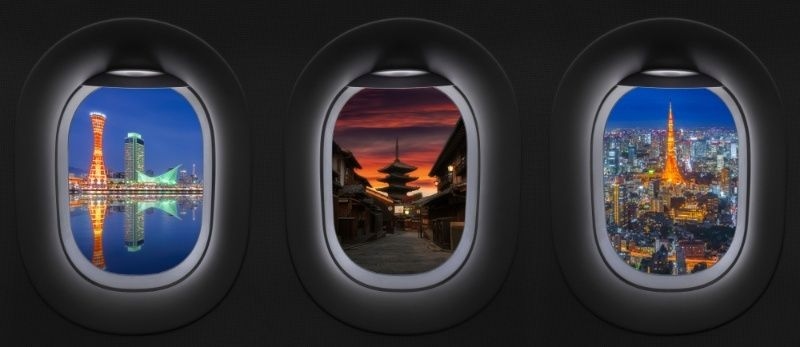
Japan is one of those places that can feel beautifully overwhelming in the best possible way. A first trip usually starts with a few famous names, then quickly turns into a bigger question about what kind of experience actually fits the traveler best. Some people want neon, food halls, and late-night neighborhoods. Others want temples, gardens, slower streets, and a stronger sense of old Japan. The good thing is that the country offers both, often on the same trip. JNTO’s official destination guide frames Japan as a mix of major cities, cultural centers, nature, and regional highlights, which is exactly why city-hopping works so well here.
For travelers trying to narrow it down, the best cities to visit in Japan usually combine atmosphere, accessibility, food, and enough personality that they do not blur together. The nine below do that especially well. Some are obvious first-time picks. Others add more depth and variety to a trip without making the plan complicated.
A strong first itinerary does not need to include every corner of the country. It just needs a mix that feels balanced. That is where this Japan travel guide approach helps. Tokyo, Kyoto, and Osaka are still the classic backbone, but adding places like Hiroshima, Kanazawa, or Fukuoka can make the trip feel much richer without losing momentum. JNTO’s itinerary and planning pages also emphasize that Japan works well when travelers combine headline cities with a few regional stops.
Tokyo earns its place immediately because it can do almost everything at once. JNTO’s destination page breaks the city into areas like Asakusa, Shibuya, Shinjuku, Ginza, Ueno, Harajuku, and Odaiba, which says a lot about its scale and range. It is a city of temples, towers, fashion, food, and neighborhoods that feel completely different from each other.
For first-time visitors, Tokyo works because it gives a huge introduction to modern Japan without feeling one-note. It is easily one of the top cities in Japan for anyone who wants energy, variety, and enough things to do that even a week barely feels enough.
Kyoto is the city many travelers picture when they imagine traditional Japan. JNTO describes it as a place where culture has been refined over the past 1,200 years, and that fits. The city is full of temples, shrines, historic streets, seasonal beauty, and a slower rhythm than Tokyo.
It deserves a spot on almost every first itinerary because it brings history and atmosphere in a way that feels immediate. Among the most memorable places to visit in Japan, Kyoto is usually the one that leaves people wanting more time, not less.
Osaka feels easier, louder, and more playful than Kyoto, and that contrast is exactly why it works so well on the same trip. JNTO describes Osaka as relaxed, food-focused, and full of nightlife, with history and culture still in the mix. It is also home to major attractions like Dotonbori, Osaka Castle, and the Osaka Bay area.
This is one of the strongest Japan tourist destinations for travelers who care about street food, neighborhoods with personality, and a city that feels welcoming rather than formal. Osaka often ends up being the city people did not expect to love quite so much.
Hiroshima gives a trip emotional depth as well as beauty. JNTO highlights the Atomic Bomb Dome, Peace Memorial Park, Miyajima’s floating shrine, and the wider Seto Inland Sea area as major reasons to visit. The city is reflective without feeling defined only by tragedy, and that balance matters.
It is one of the more meaningful Japan vacation ideas for travelers who want history, scenery, and a city with both cultural weight and easy side trips.
Sapporo is often associated first with winter, and JNTO leans into that, calling it a winter wonderland known for outdoor fun, food, and famous beer. But it also works well in summer, when Hokkaido’s lighter climate feels refreshing compared with warmer parts of Japan.
For travelers building a broader Japan travel guide route, Sapporo adds a very different urban mood. It feels more spacious, more seasonal, and less dense than Tokyo or Osaka, which makes it one of the best cities to visit in Japan for repeat visitors and first-timers looking beyond the standard route.
Fukuoka does not always get as much attention as Tokyo or Kyoto, but it should. JNTO describes it as a relaxed port city known for seafood, ramen, festivals, and easy access to the wider Kyushu region. It also has a reputation for friendly energy and livability that comes through quickly.
This is one of the smartest top cities in Japan to consider when a traveler wants great food and a major city that feels less crowded by international tourism than the usual big three.
Related Resource: Most Beautiful Train Journeys Around the World Explore
Kanazawa is one of the strongest choices for travelers who want beauty, craft, and historical atmosphere without Kyoto’s scale. JNTO describes it as a major center for Edo-period art and culture, with museums, workshops, samurai heritage, and strong architectural character.
It stands out among Japan tourist destinations because it feels elegant and distinct. Kenrokuen, preserved districts, gold leaf culture, and traditional craft history give the city a richness that feels very different from the faster rhythm of larger urban stops.
Nara is often visited as a day trip, but it is worth thinking of as more than that. JNTO emphasizes its role as the political and religious heart of ancient Japan, along with Nara Park, its free-roaming deer, and major temple sites, including Todaiji.
For travelers listing the most memorable places to visit in Japan, Nara deserves real attention because it gives a calmer, older, and more contemplative side of the country. Even a short stay can add a lot of texture to a Kansai-based trip.
Nagasaki is one of the most distinctive cities on this list. JNTO describes it as a vibrant port city with international flair, shaped by centuries of exchange with mainland Asia and the wider world. The city’s layered history, hills, harbor views, and multicultural feel make it unlike anywhere else in Japan.
It also helps that JNTO recently noted Nagasaki’s selection in The New York Times’ “52 Places to Go in 2026,” which underlines how much international attention it is getting right now.
Among strong Japan vacation ideas, Nagasaki works especially well for travelers who want something less predictable but still deeply rewarding.
Not every trip needs all nine. A first visit often works best with three to five stops, depending on time and pace. Travelers who want the classic route usually start with Tokyo, Kyoto, and Osaka. Those who want more variety often add Hiroshima or Nara. Those who want a more regional feel may build around Fukuoka, Kanazawa, or Nagasaki instead. JNTO’s planning resources also stress matching destinations to season, interests, and travel style rather than trying to see everything at once.
That is really the best way to think about the best cities to visit in Japan. The right list depends on whether the traveler wants food, history, urban energy, slower culture, winter scenery, or a bit of all of it.
On a Related Note: Best Places to See Bioluminescence for Glowing Nights
The common thread is not just popularity. It is a contrast. Tokyo gives scale. Kyoto gives a heritage. Osaka gives food and fun. Hiroshima gives perspective. Sapporo brings seasonal variety. Fukuoka feels relaxed and modern. Kanazawa offers craft and culture. Nara slows things down. Nagasaki adds a more international historical layer. Together, they show why the strongest Japan tourist destinations are not interchangeable. Each city shifts the mood of the trip in a meaningful way.
That is also why these cities work so well for real Japan vacation ideas. They can be combined in different ways without making the journey feel repetitive.
For most first-time travelers, three to five cities is a comfortable range. That gives enough variety without turning the whole trip into a packing and train-transfer exercise. Japan’s transport network is excellent, but moving too often can still make the trip feel rushed. A better plan is usually to choose one large city, one cultural stop, and one or two additional places that fit personal interests. That usually creates a fuller experience than trying to squeeze in too many names.
Osaka and Fukuoka are usually the strongest picks for travelers who plan around meals. Osaka has a long reputation for food culture, casual eating, and energetic dining areas, while Fukuoka is especially loved for ramen, seafood, and a more relaxed local feel. Tokyo also offers incredible food, of course, but the experience can feel more overwhelming because the city is so large. People who want a food-led trip often find Osaka or Fukuoka easier to enjoy right away.
That depends on the destination. Cities like Tokyo, Kyoto, and Osaka work very well as bases because they connect easily to nearby areas by train. At the same time, some places, such as Kanazawa or Nagasaki, usually feel more rewarding when travelers stay overnight and let the city breathe a little. The biggest mistake is treating every destination as a checklist stop. Japan usually feels better when at least a few cities are experienced slowly enough to notice how they change from morning to night.
This content was created by AI